
2026: The Year AI Becomes a Team Member - Not a Tool

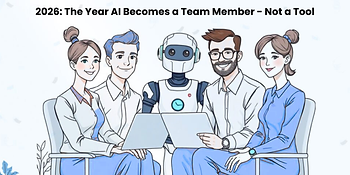
How Businesses Can Build a Workplace Where AI and Humans Work Together Naturally
The relationship between companies and technology is shifting quickly. Instead of using AI as a simple helper for isolated tasks, organisations are beginning to rely on it the way they rely on a dependable colleague, someone who remembers details, suggests improvements, and keeps work moving smoothly. This evolution does not replace human strengths; it enhances them by providing clarity, speed, and consistency across everyday operations.
As we enter 2026, AI starts becoming part of the team. Not a tool you “use,” but an intelligent partner that supports people in doing their best work. This blog explains how this transition is happening, why it matters, and how companies can prepare without complication.
1. Why 2026 Marks a New Phase for AI in the Workplace
AI has moved beyond being a tool that performs specific actions. It is now becoming deeply integrated into business systems, which gives it a better understanding of context, processes, and daily priorities. This allows teams to interact with AI much more naturally, without needing technical knowledge or complex instructions.
What makes 2026 different is that AI becomes more proactive. Instead of waiting for commands, it identifies patterns, highlights potential concerns, and provides suggestions much earlier in the workflow. This shift positions AI as a supportive partner that helps teams stay organised, informed, and prepared.
2. What It Really Means for AI to Act Like a Team Member
When AI is treated as a team member, the focus moves from automation to collaboration. AI supports the team by managing repeated tasks, identifying trends, and assisting in decision-making while allowing people to stay in control. This creates a more balanced workflow where human judgment and AI precision complement each other.
The goal is not to mimic human behaviour but to strengthen the reliability of everyday work. In practice, this means fewer errors, smoother communication, and more time for teams to focus on meaningful activities that require creativity and insight.
3. AI as an Assistant: Handling Everyday Tasks with Ease
AI now helps teams navigate daily responsibilities by preparing documents, summarising lengthy content, analysing conversations, and converting discussions into actionable tasks. These small but frequent activities often take more time than expected, and automating them brings noticeable relief.
With AI managing documentation and repetitive coordination, individuals can dedicate more energy to decision-making, planning, and creative thinking. It becomes a quiet support system that ensures information is always clear, complete, and well-organised.
4. AI as a Coordinator: Bringing Structure to Daily Operations
Work often slows down not because of lack of effort, but because of communication gaps and missed follow-ups. AI helps reduce these challenges by monitoring deadlines, tracking progress, and sending reminders to the right teams at the right time. This keeps projects running smoothly and ensures important activities are never overlooked.
It also helps connect different departments by sharing updates instantly, reducing the chances of misalignment. This creates a more predictable and structured work environment where every team stays informed, even during busy periods.
5. AI as an Advisor: Supporting Confident and Informed Decisions
AI has become capable of analysing real-time data and turning it into clear, actionable insights. This means businesses can understand trends earlier, notice silent risks, and make decisions with greater clarity. Instead of navigating through large reports, teams receive concise summaries that highlight what matters most.
This advisory support is especially helpful during planning, budgeting, or performance reviews. It gives leaders a more complete picture of the business without requiring complex analysis, making decision-making smoother and more confident.
6. How AI Functions as a Team Member: Real-World Examples

AI adds value across different functions by filling gaps that typically slow work down. Here are simple examples:
Sales Example
AI reminds teams about pending follow-ups, prepares quotation drafts, and identifies leads that need attention. This keeps the sales pipeline active and well-managed.
Operations Example
AI monitors project steps, alerts teams about delays, and updates task boards automatically. This creates consistency and reduces unnecessary back-and-forth communication.
Finance Example
AI reviews spending patterns, highlights irregular transactions, and supports teams in managing monthly budgets. This improves financial visibility with minimal effort.
HR Example
AI assists with onboarding, maintains employee records, and summarises attendance trends. This reduces administrative workload and keeps processes organised.
7. Why Treating AI as a Team Member Strengthens the Entire Organisation
Businesses often deal with repetitive tasks, scattered information, and time-consuming coordination. AI helps reduce these challenges by adding predictability, accuracy, and structure to daily activities. This leads to smoother operations and more focused teams.
With AI taking care of routine responsibilities, people can focus on high-value work such as strategy, customer relationships, creative problem-solving, and team development. This not only improves productivity but also enhances the overall work culture by allowing individuals to work with more clarity and less pressure.
8. What an Organisation Needs Before Introducing AI in a Team Member Role
AI becomes more effective when certain foundations are in place. These are simple, practical steps that improve clarity and ensure AI can work accurately.
Centralised Data: Storing information in one system (CRM, ERP, or project tool) helps AI understand the full context.
Standard Workflows: Clear processes allow AI to support tasks consistently.
Good Digital Habits: Updating records and maintaining clean data improves AI’s reliability.
These practices benefit the organisation even before AI is introduced, making the transition smooth and productive.
9. What AI Cannot Replace - And Why That Matters
AI supports work, but it does not replace the qualities that make teams human. Empathy, relationship-building, creativity, negotiation, and leadership remain firmly in human hands. This balance is important because it ensures the workplace grows stronger without losing the authenticity and judgment that only people can bring.
The most successful organisations in 2026 will combine human intuition with AI-driven structure, creating a workplace that is both efficient and thoughtful.
10. A Simple Roadmap to Start Using AI as a Team Member

Introducing AI does not require major changes. A gradual, structured approach helps teams build familiarity and trust.
Start with repetitive tasks like documentation, reminders, and summarisation.
Organise data in a central platform so AI has context.
Use AI for small assistance, such as writing or organising information.
Integrate AI into existing workflows so it can track progress and highlight important updates.
Review AI insights weekly to support planning and decision-making.
Automate coordination tasks like reminders and task updates.
Move towards advanced AI orchestration once the team is comfortable.
This journey ensures AI becomes a natural part of the team, supporting work without overwhelming the organisation.
11. The Future: A Workplace Where Humans and AI Grow Together
The most meaningful transformation in 2026 is not technological; it is cultural. Workplaces become more balanced, more organised, and more supportive when AI handles routine tasks, and humans focus on meaningful contributions. This partnership creates a healthier work environment where clarity meets creativity and structure supports innovation.
By welcoming AI as a team member, organisations step into a future where work flows more smoothly, decisions are made confidently, and teams operate with a sense of stability and purpose.


